
Food and drink news for the discerning consumer
Wednesday, 4 February 2026
That's Health: PPRX strengthens access to Mounjaro and Wegovy as ...
That's Health: PPRX strengthens access to Mounjaro and Wegovy as ...: PPRX, a fully registered UK pharmacy, has confirmed expanded national access to prescription weight-loss injections Mounjaro and Wegovy, res...
Tuesday, 3 February 2026
Milk on the Doorstep: Why UK Milk Delivery Services Still Matter

As shoppers become more conscious of sustainability, freshness and supporting British producers, the humble milk round is proving its relevance once again.
Why Milk Delivery Still Works
Fresher, Better-Tasting Milk
Doorstep milk is often bottled within 24 hours, with fewer steps between farm and fridge. That shorter supply chain can mean noticeably fresher milk compared with supermarket alternatives.
Less Plastic, Less Waste
Most services use reusable glass bottles that are collected and returned for reuse. For households trying to reduce single-use plastic, this is a simple, practical switch.
Everyday Convenience
Regular deliveries remove the need for last-minute shop trips when milk runs out. You get what you need, when you need it — without impulse buys.
Supporting UK Dairies
Milk delivery often supports British farms and independent dairies, helping smaller producers survive in a competitive market.

Milk delivery now combines tradition with modern systems:
Milk & More – A national service delivering milk and everyday essentials via online ordering.
McQueens Dairies – A long-established family business serving large parts of the UK.
https://www.mcqueensdairies.co.uk
Freshways – Best known for wholesale, but also running doorstep rounds in some areas.
The Modern Miulkman
Delivers dairy and non-dairy milks and mor
https://themodernmilkman.co.uk
Independent local dairies – Many communities are still served by regional milk rounds offering milk, eggs, juice and more.
A Modern Take on a Classic Service
Today’s milk delivery is fully updated, with online accounts, flexible delivery schedules, easy order changes and digital payments — all without losing the personal service people value.
Is It Worth the Cost?
Milk delivery can cost slightly more than supermarket milk, but many customers feel the benefits outweigh the difference. Better freshness, reduced waste, fewer shop trips and the environmental gains all add up.
Final Milky Thoughts
Milk delivery in the UK isn’t about nostalgia — it’s about practicality. With reusable bottles, reliable delivery and support for British producers, it offers a refreshingly sensible way to buy a daily staple.
Sometimes, the simplest ideas are the ones that still work best.
Finalists and Semifinalists for $1 Million Seeding The Future Global Food System Challenge announced
Created and funded by Seeding The Future Foundation and, for the first time, hosted by Welthungerhilfe (WHH), the Challenge attracted a record 1,600+ applications from innovator teams in 112 countries, underscoring growing global momentum for food systems transformation.
Following a multi-stage, rigorous international review process, 36 teams advanced across three award levels. These include 16 Seed Grant Finalists (competing for 8 awards of USD 25,000), 12 Growth Grant Semifinalists (competing for 3 awards of USD 100,000), and 8 Seeding The Future Grand Prize Semifinalists (competing for 2 awards of USD 250,000).
“Hosting the GFSC reflects Welthungerhilfe’s commitment to accelerating bold, scalable innovations where they are needed most. This year’s diversity of solutions underscores the complexity of food system challenges and the creativity of innovators worldwide.” Jan Kever, Head of Innovation at Welthungerhilfe told That's Food and Drink.
The submitted innovations span diverse themes and approaches, including climate-smart production, nutrient-dense foods, food loss reduction, and inclusive market models, reflecting the complexity and interconnected nature of today’s food systems challenges.
“The Seeding The Future Global Food System Challenge exists to catalyze impactful, bold, and scalable innovations that advance food systems transformation. We are excited to work alongside Welthungerhilfe as a trusted partner and host of the Challenge and are encouraged by the quality and diversity of innovations emerging from this first year of collaboration.” said Bernhard van Lengerich, Founder and CEO of Seeding The Future Foundation
While the number of awards is limited, all semifinalists and finalist applicants plus all applicants with any prior recognition of other innovation competitions can join the STF Global Food System Innovation Database and Network—currently in beta testing with the Food and Agriculture Organization of the United Nations—vastly expanding their visibility and reach across a global audience.
List of 2025 GFSC Seed Grant Finalists, Growth Grant and Seeding The Future Grand Prize Semifinalists
Find details here: welthungerhilfe.org/gfsc-finalists
Seeding The Future Grand Prize Semi-Finalists
CNF Global, Kenya
ZTN Technology PLC, Ethiopia
One Acre Fund, Rwanda
Sanku, Tanzania
Nabahya Food Institute (NFI), Democratic Republic of the Congo
ABALOBI, South Africa
metaBIX Biotech, Uruguay
Nurture Posterity International, Uganda
Growth Grant Semi-Finalists
Baobaby, Togo
Safi International Technologies Inc., Canada
Centro Internacional de Mejoramiento de Maíz y Trigo (CIMMYT), Mexico
Farmlab Yeranda Agrisolution Producer Company Limited, India
Banco de Alimentos Santa Fe (BASFE), Argentina
Chartered Consilorum (Pty) Ltd, South Africa
American University of Beirut, Environment and Sustainable Development Unit (ESDU at AUB), Lebanon
The Source Plus, Kenya
Iviani Farm Limited, Kenya
Rwandese Endogenous Development Association, Rwanda
NatureLEAD, Madagascar
Ndaloh Heritage Organisation, Kenya
Seed Grant Finalists
Inua Damsite CBO, Kenya
World Neighbors, United States
Keloks Technologies Ltd, Nigeria
REBUS Albania, Albania
Tanzania Conservation and Community Empowerment Initiative (TACCEI), Tanzania
Intrasect, Switzerland
VKS AGRITECH, India
Murmushi People's Development Foundation, Nigeria
Levo International, Inc., United States
Effective Altruism Research Services Ltd, Uganda
Taita Taveta University, Kenya
CultivaHub, Democratic Republic of the Congo
Resource Hub for Development (RHD), Kenya
FUTURALGA S.COOP.AND, Spain
West Africa Centre for Crop Improvement, University of Ghana, Ghana
Sustainable Solutions Kenya, Kenya
About Seeding The Future Foundation
STF is a private nonprofit dedicated to ensuring equitable access to safe, nutritious, affordable, and trusted food. It supports innovations that transform food systems and benefit both people and planet. More at Seeding the future.
Sunday, 1 February 2026
That's Christmas 365: Winter Comfort Food That Still Feels Christmassy
That's Christmas 365: Winter Comfort Food That Still Feels Christmassy: Christmas Day may be packed away with the decorations, but winter is far from over – and neither is the appetite for comforting, festive foo...
Saturday, 31 January 2026
That's Christmas 365: How to Host a “Late Christmas” Weekend in February
That's Christmas 365: How to Host a “Late Christmas” Weekend in February: Because Life and Poor Health Got in the Way. This is what That’s Christmas 365 is doing! Christmas doesn’t stop being Christmas just because...
Friday, 30 January 2026
Pineapple on a Full English? A Surprisingly Historical Argument

Baked beans are tolerated, hash browns are still contentious in some quarters, and heaven help anyone who mentions avocado.
Yet one of the more intriguing (and eyebrow-raising) ideas to surface in recent years comes from Guise Bule de Missenden, founder of the English Breakfast Club, who argues that pineapple may have a legitimate place on the plate, not as a modern gimmick, but on historical grounds.
At first glance, pineapple alongside bacon and eggs sounds like pure provocation. But dig a little deeper, and the argument becomes rather more… British than you might expect.
The Victorian Breakfast Was Not a Modest Affair
The idea of a “traditional” full English as a fixed, unchanging list is largely a modern invention. In the Victorian and Edwardian eras, breakfast — particularly among the middle and upper classes — was expansive, indulgent, and often theatrical.
Breakfast tables could include:
Multiple meats (ham, bacon, kidneys, game)
Fish (kedgeree, kippers)
Eggs in several forms
Preserves, fruits, and sweet accompaniments
Crucially, fruit was not seen as out of place. Fresh, preserved, or stewed fruit regularly appeared at breakfast, especially in wealthier households where imported produce was a sign of status.
Pineapple: A Symbol of British Luxury
Pineapple has a long and fascinating relationship with Britain. Far from being a purely tropical novelty, it became an 18th- and 19th-century status symbol, associated with hospitality, wealth, and empire.
In Georgian and Victorian Britain:
Pineapples were grown in heated glasshouses at enormous expense
They were displayed as centrepieces at banquets
They symbolised refinement and worldliness
If pineapple could sit proudly atop a table as a symbol of welcome and abundance, the argument goes, why would it be excluded from a grand breakfast spread?
Sweet Meets Savoury: Not as Alien as It Sounds
British breakfasts have long embraced sweet-and-savoury contrasts:
Marmalade with salty buttered toast
Fried bread paired with ketchup
Bacon alongside sweet chutneys or brown sauce
Pineapple offers:
Acidity to cut through fatty bacon
Natural sweetness to balance salt
A refreshing counterpoint to heavier elements
From this perspective, grilled or lightly warmed pineapple isn’t an outrageous addition — it simply leans into contrasts the breakfast already enjoys.
A Historical Footnote, Not a Mandate
To be clear, this argument isn’t suggesting pineapple should replace anything, nor that cafés must rush to add it to menus nationwide. Instead, it reframes the conversation:
The full English breakfast has always evolved, and its historical roots are far broader and more flexible than many modern purists admit.
Seen through that lens, pineapple isn’t an invasion. It’s a revival of a time when breakfast was about abundance, variety, and a little culinary swagger.
So… Should Pineapple Be Allowed?
Whether you personally welcome pineapple onto your plate is another matter entirely. For some, it will remain culinary heresy. For others, it’s a fascinating reminder that British food history is richer — and stranger — than we often give it credit for.
One thing is certain: once you realise that the “traditional” full English has never been entirely fixed, the debate becomes far more interesting than a simple yes or no.
And if nothing else, it proves that breakfast, like history itself, is always up for reinterpretation.
Wednesday, 28 January 2026
The Future in the Glass: the spirits business Names the Top Innovators Redefining Spirits and What It Means for 2026
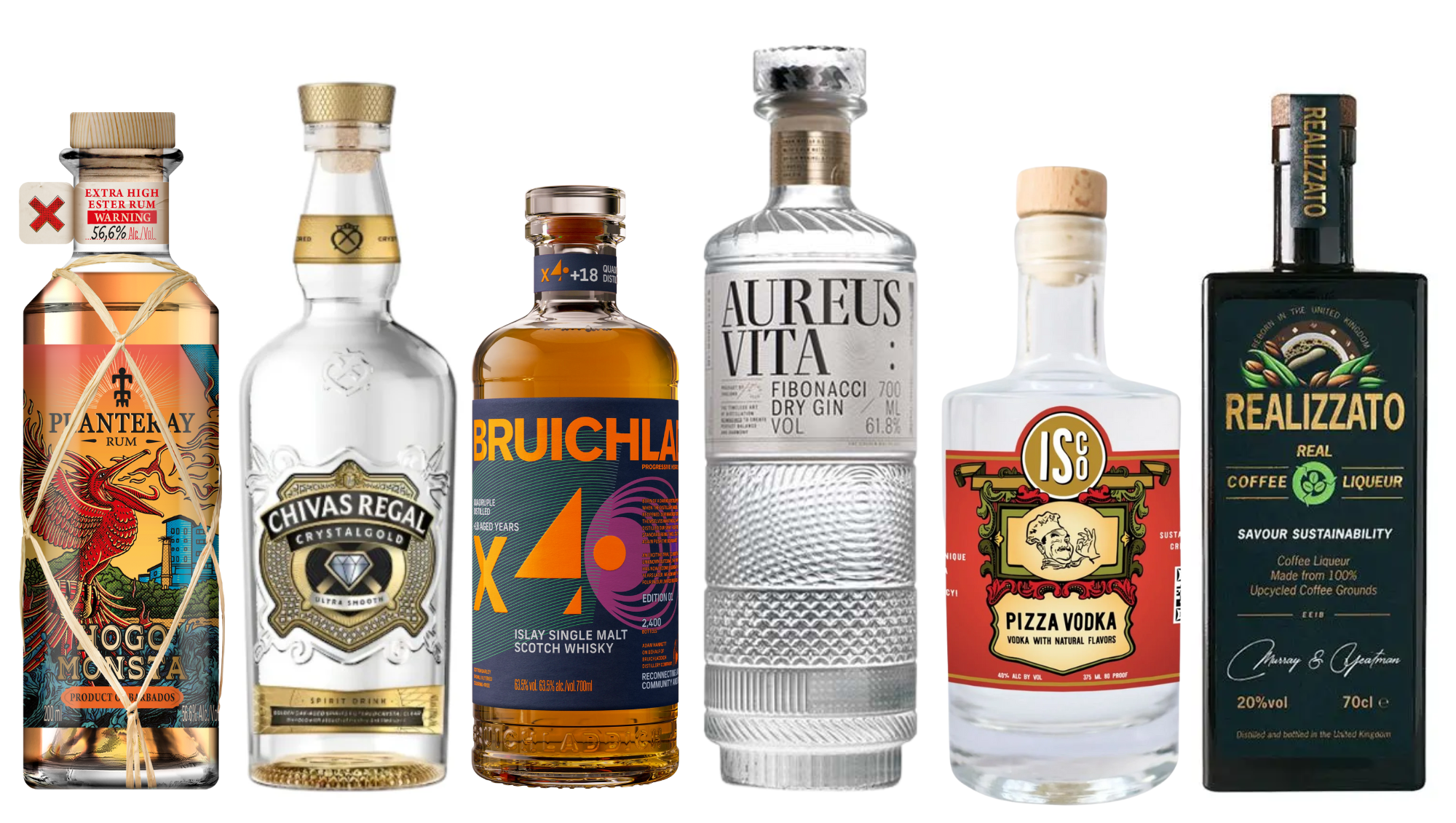
The spirits business, the leading global drinks media, has revealed its final top 10 in the Top 50 Innovative Spirits Launches of 2025, spotlighting the brands that pushed boundaries and offered a clear signal of where the global spirits market is heading next.
Collectively, these 10 liquids represent a shift away from incremental line extensions towards genuine technical, sensory and cultural innovation – a trend that will shape brand strategy, portfolio development and consumer expectations well into 2026.
The Top 10 Shortlist
1: Chivas Regal Crystalgold - A crystal-clear Scottish spirit drink created through bespoke filtration that removes colour without stripping flavour. Designed for long serves, crossover occasions and daytime drinking, the number-one product opens up whisky to new consumption moments.
2: Three Families (Mr Lyan x Rockland x Dilmah Tea) – A range of cocktail seasonings blending bitters tradition with modern distillation and tea extracts. Designed to empower experimentation behind the bar and at home, turning flavour into a modular tool.
3: Never Never Signature Vodka – A texture-driven vodka enriched with olive, coconut and avocado oils to deliver mouthfeel as a primary differentiator. Built for premium Martinis and neat sipping.
4: Planteray Hogo Monsta – An ultra high-ester rum designed as a flavour amplifier rather than a sipping spirit. A technical release that celebrates intensity, funk and bartender creativity.
5: Realizzato Coffee Liqueur – A sustainability-led innovation using upcycled coffee grounds to create alcohol, paired with fully recycled packaging. Circular production meets premium flavour.
6: Archie Rose Wattleseed Smoked Cask Whisky -– An Australian single malt smoked via native wattleseed-treated barrels, creating uniquely regional flavour architecture.
7: 1906 Cannabis Spirit – A neutral, alcohol-free THC and CBG ‘spirit’ engineered for social drinking occasions beyond alcohol.
8: Bruichladdich X4+18 Edition 01 – The world’s first quadruple-distilled 18-year-old single malt Scotch, pushing cost, yield and process boundaries.
9: Aureus Vita Gin – Produced on a Fibonacci-inspired still that applies mathematical ratios to botanical interaction and distillation geometry.
10: Isco Pizza Vodka – A vodka distilled from a full organic pizza – herbs, tomato, cheese and wheat – proving novelty flavour can deliver commercial scale when executed seriously.
Melita Kiely, editor-in-chief of The spirits business, said: “Our top 50 ranking explored the most creative products that came to market in 2025, from production techniques to unusual flavours, and even products reaching new heights with their purpose and marketing initiatives.
What’s clear to see is producers are not afraid to explore new flavour dimensions – and for many, their efforts are paying off. Our top pick, Chivas Regal Crystalgold, was especially exciting to see. This spirit has the potential to open the Scotch whisky category up to new drinkers, particularly loyal fans of white spirits, and it’s great to see a brand like Chivas boldly step forward to deliver something truly different and distinct.”
https://www.thespiritsbusiness.com/
Will you be trying pizza flavoured vodka? Please let us know in the comments below!
That's Business: Feedr Data Suggests the Working Week Is Rebalancin...
That's Business: Feedr Data Suggests the Working Week Is Rebalancin...: Office attendance patterns are starting to shift beyond the typical post-Covid midweek peak , according to new data from corporate food plat...
SquareMeal announces the UK Top 100 Restaurants for 2026

Unlike any other list of its kind, SquareMeal’s UK Top 100 excludes London restaurants, allowing the wider UK dining scene to take centre stage.
Compiled using a combination of thousands of reader votes and insight from SquareMeal’s expert critics, the UK Top 100 Restaurants list offers a true snapshot of Britain’s diverse and dynamic food culture.
Across the UK, regional dining scenes continue to thrive. Edinburgh leads the way in 2026 with six restaurants featured, including Lyla, The Little Chartroom, and new entries Ardfern, Cardinal, Dogstar and Moss. Birmingham follows closely with five restaurants making the list, including former Top 100 champion Grace & Savour and two Michelin-starred Opheem.
The highest new entry on the list is Vraic in Guernsey, which makes an impressive debut at number four. Elsewhere, culinary powerhouses such as North Yorkshire, Kent and the West Midlands are all strongly represented with multiple entries in the UK Top 100.
SquareMeal UK Top 100 2026 Winner: Wilsons, Bristol
The number one restaurant in the UK for 2026 is Wilsons.
Wilsons in Bristol epitomises the ideal neighbourhood restaurant, delivering confident modern British cooking crafted almost entirely from produce grown in its own market garden. Intimate and charming, it’s one of only a handful of UK restaurants to hold both a Michelin star and a Green Star. Despite its sustainability credentials and world-class cooking, Wilsons remains remarkably good value.
Wilsons was opened in 2016 by partners Jan Ostle and Mary Wilson. Ostle leads the kitchen, while Mary Wilson’s background in biodynamic agriculture underpins the restaurant’s produce-led ethos. Mary also grew up in her family restaurant, which Wilsons is named in honour of.
Chef and Co-Founder Jan Ostle told That's Food and Drink: "We feel incredibly honoured to have been named SquareMeal’s UK Restaurant of the Year 2026.
"This recognition is testament to the dedication of our entire team, the Bristol community that supports us, and the incredible farmers and growers whose produce shapes everything we do. 2025 was a landmark year for us at Wilsons, and this feels like the perfect way to begin 2026. We’re so excited for what the year ahead will bring."
SquareMeal’s Restaurants Editor, Pete Dreyer, adds: "Few restaurants in Britain combine creativity, humility and value as convincingly as Wilsons. Achieving this from a tiny kitchen and a two-acre farm, without compromising its sustainable, waste-free ideals, is a phenomenal achievement."
Content Director for SquareMeal Caroline Hendry explains the process behind tSqhe awards: "For 2026, judges placed renewed emphasis not only on exceptional cooking, but also on sustainability and a commitment to positive, people-first working environments. With professional kitchens often recognised as high-pressure spaces, this year’s list highlights restaurants actively prioritising staff welfare alongside culinary excellence.’
The full UK Top 100 Restaurants list can be viewed here:
https://www.squaremeal.co.uk/restaurants/best/uk-top-100-restaurants_238
That's Green: Government in Court Over Animal Welfare Concerns
That's Green: Government in Court Over Animal Welfare Concerns: Image courtesy ALF The Animal Law Foundation will be facing the Government in Court next week challenging the removal of welfare protection...
Subscribe to:
Comments (Atom)