Wikipedia

Search results

Showing posts with label animal welfare. Show all posts

Tuesday, 21 October 2025

Consumers and Animals at Risk from Online Sale of “Cat-Poo-Chino”

Charity investigation reveals widespread fraud in civet coffee sales on Amazon, eBay and Etsy.

A new investigation by animal welfare and conservation charity The Civet Project Foundation, supported by international animal welfare organisation Wild Welfare, has uncovered rampant fraud and serious animal welfare concerns linked to the online sale of civet coffee, often dubbed “cat-poo-chino”, on major eCommerce platforms including Amazon, eBay, and Etsy.

Civet coffee, or kopi luwak, is marketed as a luxury product made from coffee beans that have passed through the digestive tract of civets, small nocturnal mammals native to Southeast Asia. 

Once hailed as world's rarest and most expensive coffee, with some cups priced as high as £50, civet coffee has become a symbol of exotic indulgence. 

But The Civet Project’s investigation paints a much darker picture of civet coffee’s origins and the market behind it.

Following a surge in global demand, sparked by its appearance in the 2007 film The Bucket List, civet coffee has evolved into a multi-billion-dollar industry. 

Instead of collecting beans from wild civet droppings as often claimed, producers are now capturing wild civets, confining them in dirty, barren cages, and force-feeding them coffee cherries under harrowing conditions.

“These animals suffer immensely in captivity,” the charity reports. “Wild civets are caught using inhumane methods, suffer severe injuries, and are confined without proper care, biosecurity, or veterinary oversight.” 

This not only violates animal welfare standards, but also poses a significant public health risk, as civets have been identified as potential vectors for diseases including SARS and COVID-19.

Beyond the animal cruelty concerns, the environmental impact is also severe. Civets play a vital ecological role as seed dispersers and pest controllers. 

Their removal from the wild is contributing to biodiversity loss and environmental degradation across Southeast Asia.

Despite the UK public's growing demand for ethical sourcing and high animal welfare standards, the investigation, detailed in the newly published “Industry Leaders Report 2025: Tackling Civet Coffee Consumption (eCommerce)”, found:

Every civet coffee product that claimed certification from named organisations for being 'wild collected' or 'cage-free' was either fraudulent or untraceable.

Sellers falsely claimed certification from organisations such as WWF, Rainforest Alliance, and World Animal Protection, all of whom confirmed no affiliation with civet coffee

All claims of ethical sourcing or animal welfare standards were found to be fraudulent or untraceable

These misleading practices violate UK consumer protection laws, including the CMA Green Code and the Digital Markets, Competition and Consumers Act 2024

The consumer standards, animal welfare, environmental and sustainability issues associated with civet coffee products actively breach seven platform policies employed by eBay, Amazon and Etsy.

Despite having clear policies against misleading claims, all three platforms were found to be hosting sellers in breach of their own rules, highlighting a serious enforcement gap.

Dr Jes Hooper, CEO of The Civet Project Foundation, told That's Food and Drink: “UK consumers have shown time and again that animal welfare is an important consideration when deciding what products to buy and from whom. 

"The weaponisation of animal welfare to purposely deceive consumers into purchasing products reliant on animal suffering is absolutely despicable. 

The public deserves much better from coffee retailers and eCommerce platforms. We strongly urge people to boycott civet coffee.”

The scale of the issue is alarming. Between May and August 2025, over 182kg kilograms of civet coffee were available for sale on UK-facing eCommerce sites. Despite its supposed rarity, some products were listed for as little as £15.67 per packet.

In response to the multitude of policy violations involved in the sale of civet coffee, The Civet Project is calling on Amazon, eBay, and Etsy to immediately classify civet coffee as a prohibited item and to ban its sale on their platforms. 

The charity is also urging consumers to boycott civet coffee this Christmas and beyond.

That's Food and Drink and sister sites That's Christmas 365, That's Green and That's Business support this campaign. 

https://www.thecivetproject.com

Thursday, 28 September 2023

EU Under Pressure as Footage Shows ‘Horrendous’ Polish Egg Farm

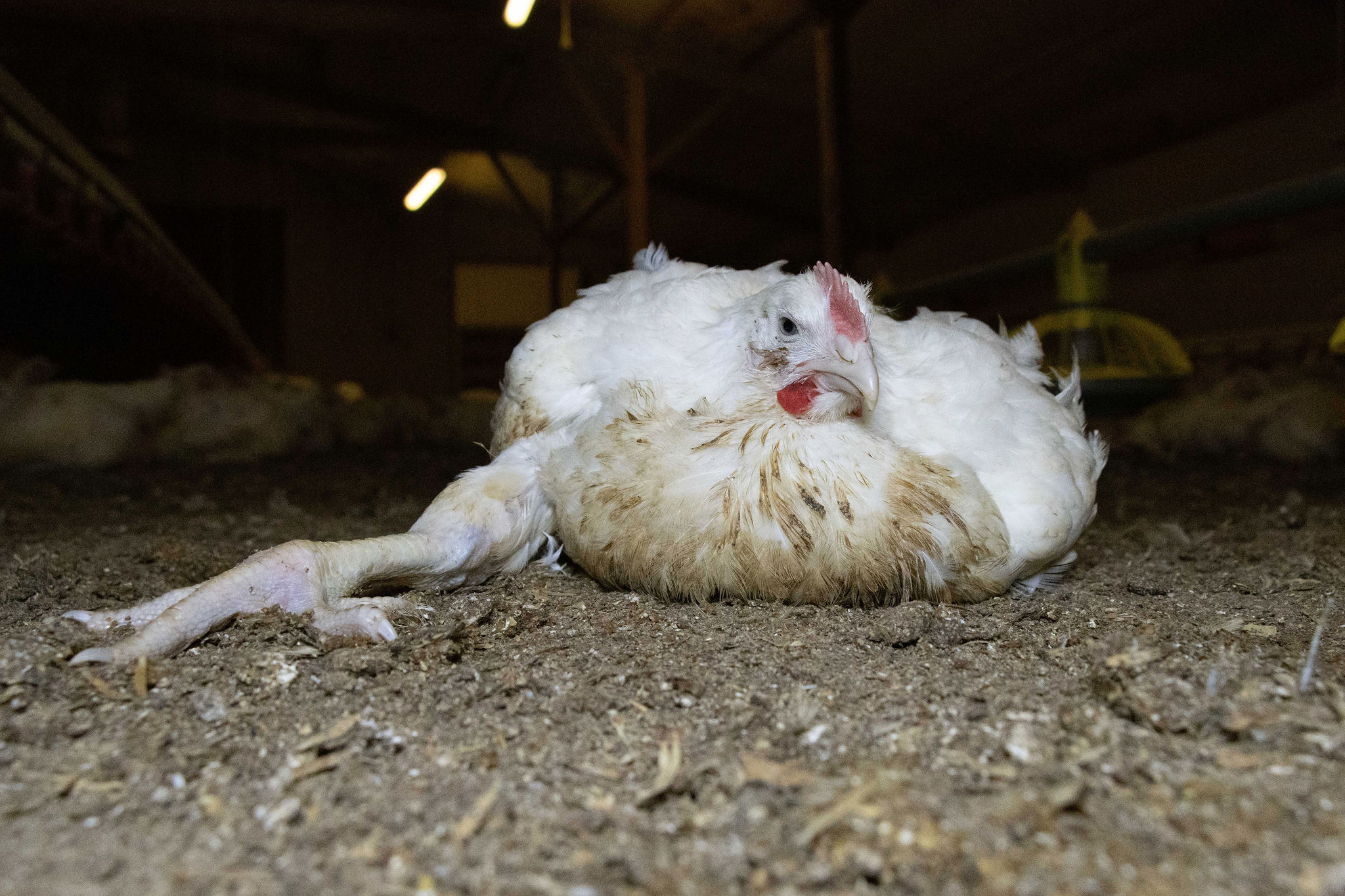
Piles of dead hens, eggs covered in blood, twisted legs, pecked feathers, these are the images documented by workers employed on a poultry farm belonging to Fermy Drobiu Woźniak, the largest egg producer in the European Union. Anima International is calling on the EU to not weaken its stance on the welfare of hens.

This summer, Oksana, together with her partner Sasha, were employed at a laying hen farm in the village of Wioska in central-west Poland. The poultry farm belongs to the largest egg producer in the EU, Fermy Drobiu Woźniak. Nearly one million hens in cages and tens of thousands of hens in barns are reared at that farm. In fact, one in five laying hens in Poland lives on one of Woźniak’s farms.

Oksana and Sasha documented their daily work for six weeks. One of their primary duties was to remove dead hens from their cages, the birds died due to the poor rearing conditions, or were killed by other hens in the cages, or died as a result of becoming stuck. For example under a perch. Each day, the workers collected dozens to hundreds of dead birds. In fact  some had been laying dead in the cages for several weeks and were already in a state of decomposition.

“Sometimes they were blue, and fluids leaked out of them,” says Sasha in the video.

The hens live in close confinement, resulting in aggression (including pecking each other to death) or acts of cannibalism. Numerous birds were in very poor physical condition,. They had missing plumage, had deformed legs and wounds to their bodies, and some died of exhaustion. The video also shows cases of hens dying while laying more eggs, with eggs stuck in their cloaca.

A veterinary inspection carried out several weeks after the footage was collected validated the concerns documented by the investigative workers. Anima International has filed a notice to the prosecutor’s office in Poland on the grounds of potential animal abuse. The footage will serve as evidence in the proceedings.

A ban on cage farming is currently under consideration by the EU as part of the revision of all EU animal welfare legislation. The European Citizens’ Initiative “End the Cage Age”, launched by Compassion in World Farming, has been signed by 1.4 million people. The European Commission is expected to present a legislative proposal on this issue this autumn.

But recent allegations that the plans could possibly be dropped have raised alarm amongst campaigners. “Many countries are already transitioning away from caged farming systems for hens,” says Kirsty Henderson, Executive Director of Anima International. “The EU must follow through on its promises and do its part in eradicating animal suffering from our food system.”

Fermy Drobiu Woźniak exports 70% of its production to 60 countries in Europe, Asia, and Africa. Every year, 300 million animals suffer in cages in the EU.

https://opencages.org/